


2026年08月10日掲載
寛永行幸四百年記念 特別展 寛永行幸と花の都の文化びと
泉屋博古館
- 会期
- 2026年09月05日~2026年10月18日
カルーセル
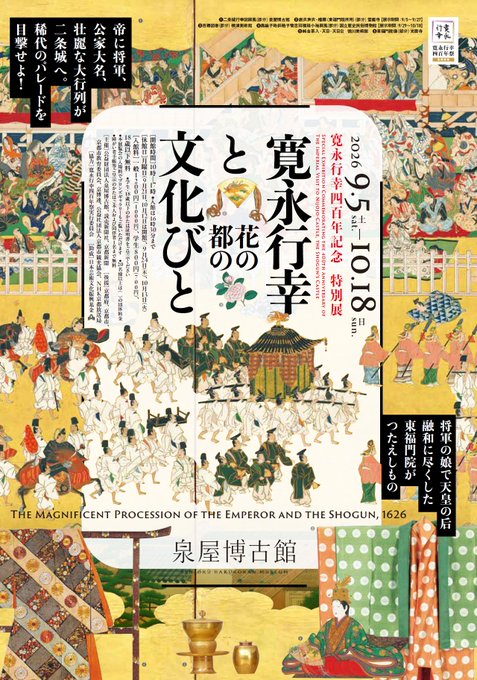
本展では行幸行列を活写する泉屋博古館所蔵 《二条城行幸図屏風》 (京都市指定文化財) を中心にこの歴史的盛事を振り返ります。そしてその前後から17世紀後半にわたり展開した寛永文化について東福門院 (徳川和子) という一人の女性を起点に見つめていきます。将軍の娘にして天皇の后となった彼女の周辺では、後水尾天皇、千宗旦、松花堂昭乗、小堀遠州、野々村仁清など、きら星の如き文化人たちが身分を越えた交流を通じ、それぞれの美の形を結びました。会場では公・武・民の架け橋となった東福門院ゆかりの品々をまじえ、その美と交流の足跡をたどります。
当館の近隣には東福門院菩提寺の光雲寺をはじめ、江戸初期復興のゆかりの社寺が点在しています。往時の雅人の息づかいを今に伝えるこの地で寛永文化に思いを馳せる一時をお過ごし下さい。
Special exhibition on the 400th anniversary of Kan’ei Gyoko
Kan’ei Gyoko – Cultural Figures in Kyoto – (tentative)
Sep.5〔Sat.〕 - Oct.18〔Sun.〕, 2026
In September 1626, the emperor visited a castle in Kyoto at the invitation of the powerful Tokugawa shogunate, heralding a new era. The city had never seen such excitement, as the first day of the procession drew the imperial family and other nobles along with leaders from across Japan. The historical significance of this procession of Emperor Go-Mizunoo to Nijo Castle (known as Kan’ei Gyoko), which heralded an age of peace and led to the emergence of new culture, is explored through a folding screen in the museum collection. The screen, designated a cultural property by the city of Kyoto, vividly depicts the procession to Nijo Castle. Focusing on the elegant Kan’ei culture that developed during the second half of the 17th century, the exhibition also introduces the aesthetics and associations of brilliant cultural figures who transcended their social status, including Emperor Go-Mizunoo himself, Tofukumon-in, Kobori Enshu, and Sen no Sotan.
- 展覧会名
- 寛永行幸四百年記念 特別展 寛永行幸と花の都の文化びと
- 分類
- 企画展
- 会場
- 泉屋博古館
- 会期
- 2026年09月05日~2026年10月18日 Googleカレンダーに登録📅
- 休館日
- 月曜日(9月21日、10月12日は開館)、9月24日(木)、10月13日(火)
- 観覧料
- 一般1,200円(1,000円) 学生800円(700円)
・18歳以下無料、学生・18歳以下のかたは証明書をご呈示ください
・入館券はオンラインチケットを除き、館受付での販売となります
・20名以上の団体は( )内の割引料金
・障がい者手帳等を呈示のかたはご本人と同伴者1名まで無料
オンラインチケット
事前販売(7月24日~9月4日23:59まで いずれもetix)
・前売入館券 上記団体割引料金
・寛永をめぐる2館セット券(京都文化博物館 寛永行幸四百年祭開催記念特別展「寛永 太平がはぐくむ美」とセット)2,400円
期間中販売(9月5日~10月18日)
・当日入館券 100円引き(18日16:30まで)
・JR東海旅先予約 1,000円(18日15:00まで)
- 住所
-
606-8431 京都府京都市左京区鹿ヶ谷下宮ノ前町24
- アクセス
- アクセス
〔京都市バス〕
JR・新幹線・近鉄電車「京都」駅/京阪電車「三条」駅から 5・105系統
阪急電車「烏丸」駅から 32・203系統
地下鉄烏丸線「丸太町」駅から 93・204系統
5・93・203・204系統「東天王町」下車、東へ徒歩200メートル
32・105系統「宮ノ前町」下車すぐ
〔地下鉄〕
東西線「蹴上」駅から徒歩約20分 - 公式サイト
- https://sen-oku.or.jp/program/202609_splendidparade400/